

Adoption of an action plan to promote the use of evaluation
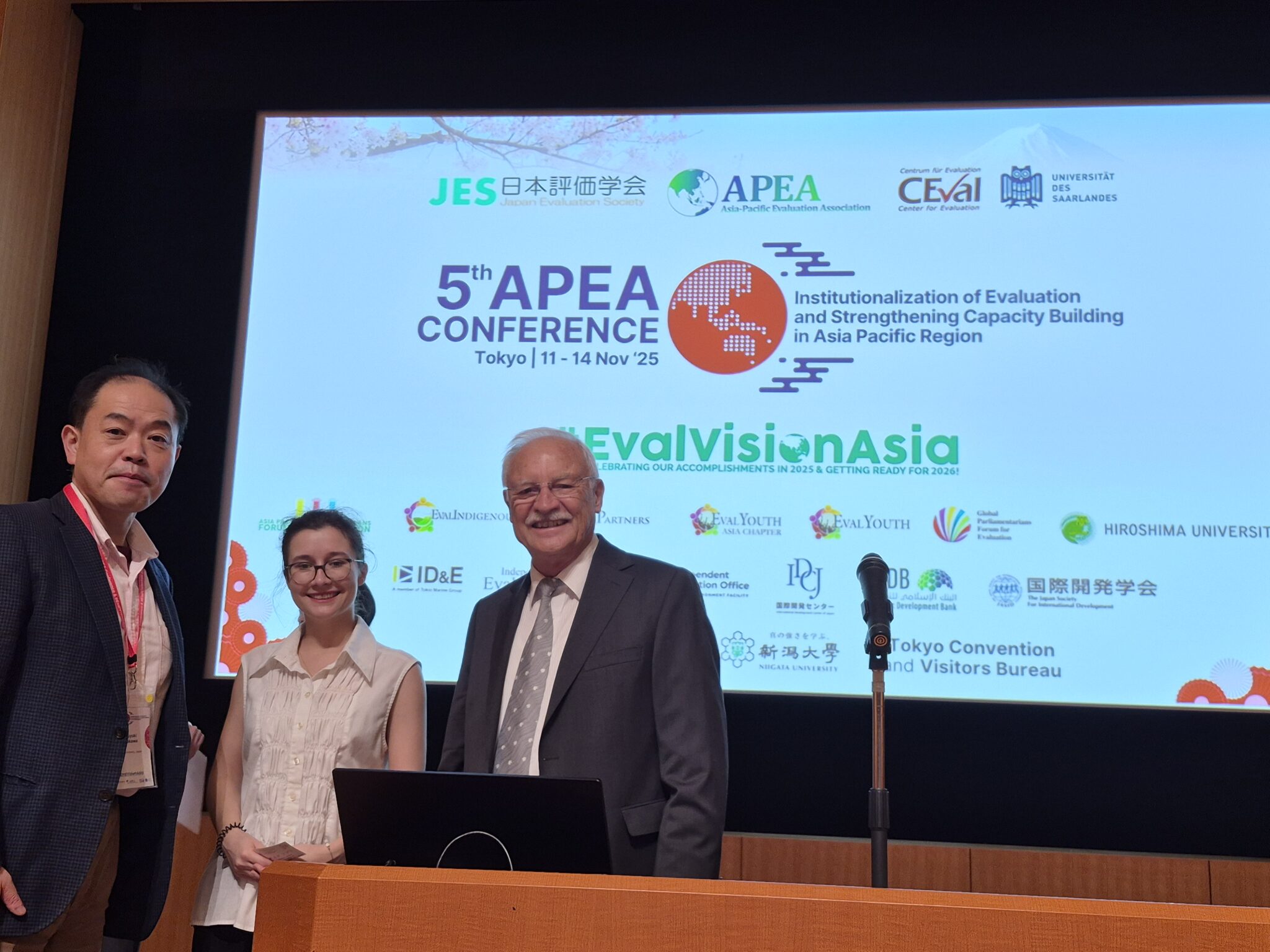
Over the past ten years, CEval has examined the institutionalization of evaluation in 50 countries worldwide. The results of the research project were presented for the first time at an international conference in Tokyo in a keynote speech by Prof. Dr. Reinhard Stockmann (Saarland University). The event, which was organized by the Asia-Pacific Evaluation Association, the Japan Evaluation Society, and the Center for Evaluation, was attended by over 250 people from 38 countries.
The focus was on the factors that hinder and promote the institutionalization and use of evaluation at the national level. One clear finding is that it is primarily political institutions such as ministries, government agencies, and authorities that determine evaluation questions, evaluation goals, and financial budgets. This means that the demand for evaluation depends primarily on political institutions, without exception in all countries surveyed worldwide. Civil society organizations, on the other hand, play no role in the institutionalization of evaluation at the national level, as they neither demand evaluation to any significant extent nor request it from government institutions or parliaments. Even parliaments themselves are not drivers of evaluation.
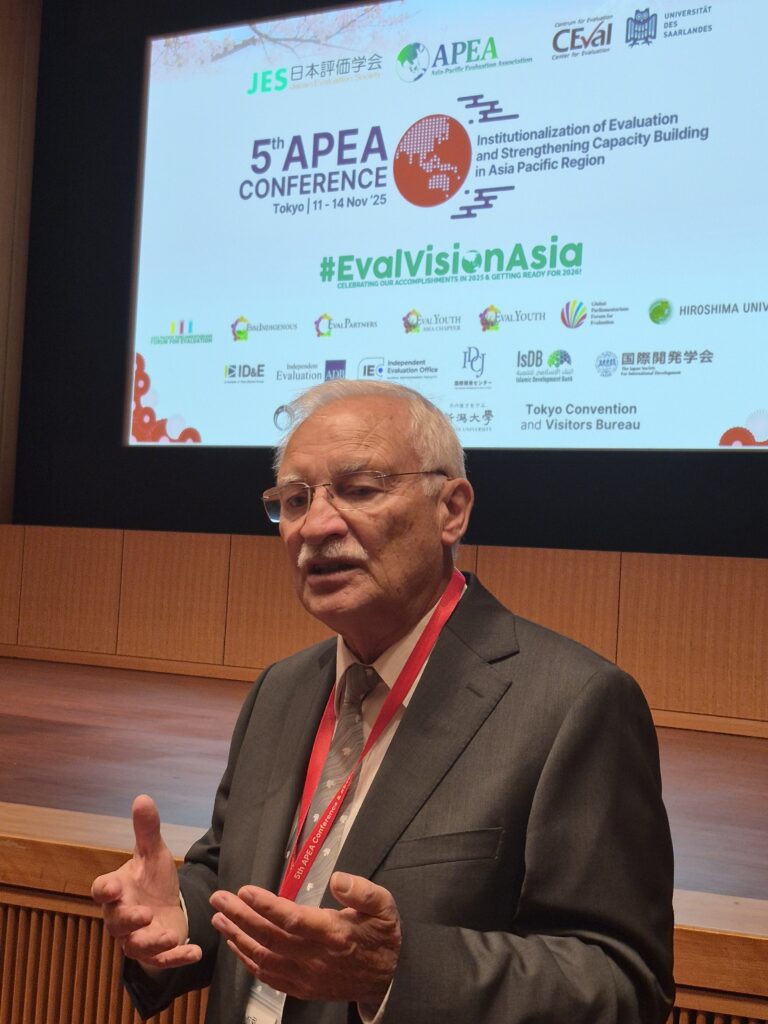
One of the most important demands of the conference participants was therefore that evaluation associations should have a greater political influence in order to promote evaluation. To this end, it is necessary to develop formats that can be used to convince governments and parliaments of the usefulness of evaluation for their work. It is recommended that important social actors, such as academia, foundations, political parties, trade unions, etc., be engaged to place pressure on governments to utilize evaluations. This should be done not only for control purposes, but also as learning tools to make programs and policies more effective, efficient, and sustainable. In addition, evaluation should also strengthen democratic governance by publishing evaluation results and making them available to the public, thereby facilitating political dialogue.
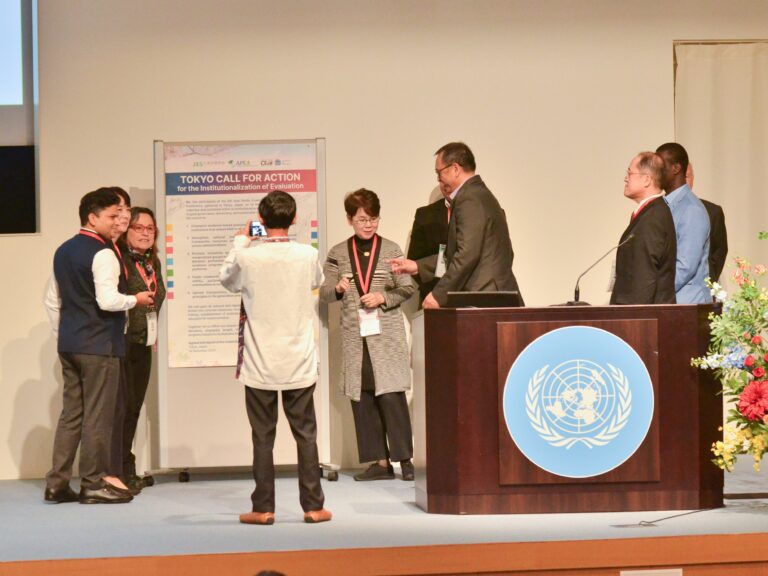
As a result of the conference, a “Tokyo Call for Action for the Institutionalization of Evaluation” was adopted, which is essentially based on the findings of the CEval Evaluation GLOBE project and aims to promote the institutionalization of evaluation worldwide in the coming years. If you would like to learn more about the goals of the Tokyo Call for Action or support it by adding your signature, you can find all the relevant information on the APEA website.


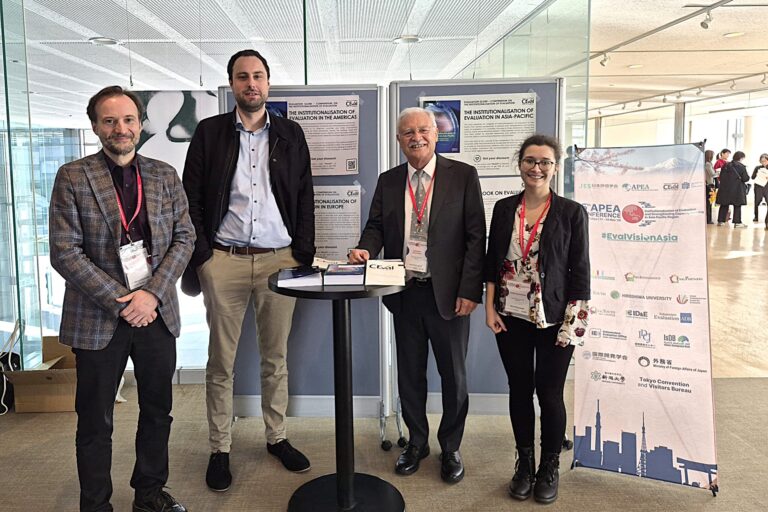
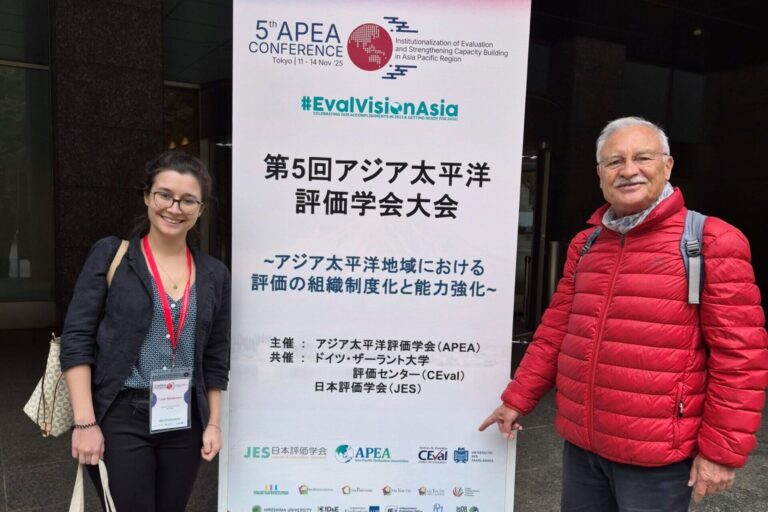
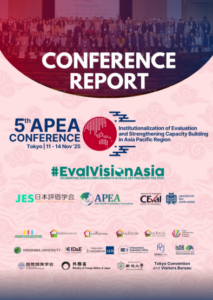
As co-organizers, we are pleased that the conference report is now available. The report provides a concise summary of all the presentations, panels, and workshops and captures the key outcomes of the event’s discussions. Key topics included:
- Institutionalizing evaluation systems
- Harnessing AI and innovation
- Advancing Indigenous and inclusive approaches
- Empowering youth as future leaders
For anyone who would like to delve deeper into the topics covered at the APEA conference, the full report is available here.
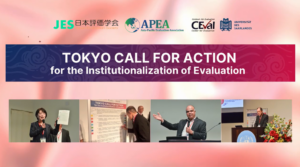
Additionally, Prof. Dr. Reinhard Stockmann explains in a short video the key findings of the CEval Evaluation Globe project and the resulting recommendations of the Tokyo Call for Action, which aim to further strengthen the institutionalization of evaluation and permanently establish evidence-based decision-making processes in policy-making.