


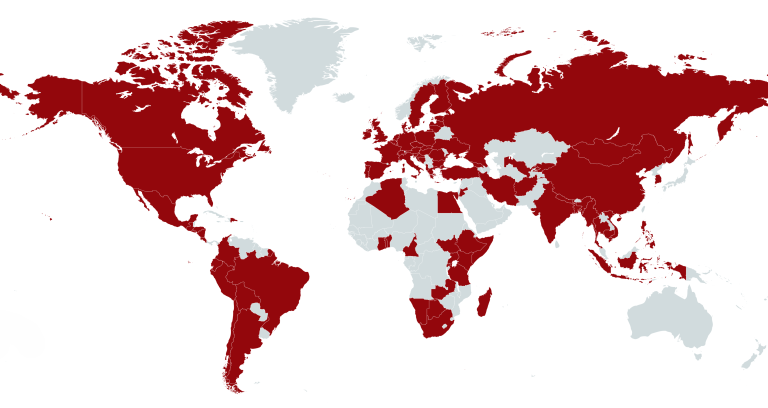
Countries of Cooperation
Accompanying, Ex Post Evaluation, Program Evaluation
Start of project: December 2023
End of project: November 2027
Copy permalink:
RePack-Network. Reduce, Reuse, Recycle – Sustainable Packaging of Food: Networking and Transfer Program for Plastics Reduction
Food is often packaged in plastics that are only used for a short time and are rarely reused or recycled. In addition to the considerable [Read More]Food is often packaged in plastics that are only used for a short time and are rarely reused or recycled. In addition to the considerable consumption of resources, the environment is also polluted by macro- or microplastics. The Federal Ministry of Food and Agriculture (BMEL) is therefore promoting innovations that help to package food more sustainably and reduce plastics along the value chain. In the RePack network, five research institutions under the leadership of the Institute for Ecological Economy Research (IÖW) accompany, support and evaluate twelve innovation projects in this funding programme. In the projects, universities and research institutions work together with companies to develop new production processes, innovative materials, packaging with an increased recycled content or reusable packaging.
The “Networking and Transfer Program for Plastics Reduction” is investigating how existing sustainable packaging concepts can be expanded. The aim is to bundle the results for different target groups and bring the projects into dialogue: To this end, cluster and themed workshops as well as conferences are being designed and organised at which the projects can network with each other and with the interested specialist public. A website and social media presence as well as a regular newsletter provide information on the progress of the projects and give insights into the innovations. The results of the funded projects are used to derive overarching recommendations for action for politics, business, civil society and consumers.
The task of CEval GmbH within the “Networking and Transfer Program for Plastics Reduction” is the conception and implementation of the accompanying and final evaluation of the BMEL funding programme for the development of packaging innovations for the food industry. To this end, a results model for the funding programme will be created, which will be empirically validated and refined, and indicator sets will be developed for the project level as well as the levels of the funding programme and the overarching innovation programme of the BMEL. Building on this, the annual accompanying evaluations and the final summative evaluation will analyse the design and implementation of the funding programme, its results and their sustainability and transferability to other fields of application, as well as identifying further fields of action and research needs. Methodologically, the theory-based evaluation follows a mix of document analyses, individual and group interviews and supplementary online surveys.
Management: Stefan Silvestrini | Co-Worker: Hansjörg Gaus, Matthias Klapproth, Hilde Folger, Juliane Löw | Cooperation Partner: Institute for Ecological Economy Research, IÖW, Gesellschaft für Verpackungsmarktforschung, GVM, Institute for Social-Ecological Research, ISOE, Sustainable Packaging Institute (SPI) of Albstadt-Sigmaringen UniversityAccompanying, Program Evaluation
Start of project: October 2023
End of project: September 2025
Copy permalink:
Evaluation of the Deval Funding Programme Rigorous Impact Evaluation
The RIE funding programme supported a matchmaking between actors from science and development cooperation, which led to funding of nine rigorous impact evaluations (RIE) to [Read More]The RIE funding programme supported a matchmaking between actors from science and development cooperation, which led to funding of nine rigorous impact evaluations (RIE) to be implemented between March 2023 and September 2025. Scientific institutions in Germany were eligible to apply together with a development project funded by the Federal German Ministry for Economic Cooperation and Development (BMZ). The programme aims to remove barriers to the implementation of RIE and to support systematic anchoring of RIE in German development cooperation.
CEval GmbH was commissioned with the evaluation of the RIE funding programme by the German Institute for Development Evaluation (DEval). The evaluation is carried out according to the OECD-DAC criteria and is based on a comprehensive analysis grid. A mix of methods is applied: The RIE project proposals and interim reports are assessed by means of a systematic review, which is structured by an assessment grid. Guideline based interviews are conducted with all relevant stakeholder groups of the programme at two points in time. In addition, a standardised online survey is implemented, which addresses all scientists and representatives of the development organisations as well as local scientists in the partner countries who are directly involved in the implementation of the nine RIE.
In addition, a Delphi survey is implemented as innovative method for looking to the future. For the first Delphi round, international experts will be recruited and their perspective on the future role of RIE in German development cooperation will be examined by thematic-focussed interviews. The results will be assessed and returned to the panel participants in a second round of inquiry in the form of an online survey in order to identify, weight and prioritise converging and diverging perspectives and views of the experts.
Management: Susanne Johanna Väth | Co-Worker: Matthias Klapproth, Hansjörg Gaus, Janis WickeMid-term Evaluaton
Start of project: January 2025
End of project: July 2025
Copy permalink:
Evaluation of the implementation of the Biodiversity Strengthening Act (BiodivStG) in Baden-Württemberg
NABU e.V. Baden-Württemberg has commissioned CEval GmbH to evaluate the implementation of the Biodiversity Strengthening Act (BiodivStG) in Baden-Württemberg. The Biodiversity Strengthening Act, which was [Read More]NABU e.V. Baden-Württemberg has commissioned CEval GmbH to evaluate the implementation of the Biodiversity Strengthening Act (BiodivStG) in Baden-Württemberg. The Biodiversity Strengthening Act, which was passed by the state parliament of Baden-Württemberg on 20th July 2020, contains numerous regulations and targets that serve to better protect nature and, in particular, to promote the insect fauna in Baden-Württemberg (biotope network, insect protection, compensation, orchard meadows, organic farming, refugial areas, pesticides). The implementation of the law primarily affects the departments of nature conservation, agriculture, state property and state planning. Additionally, the impact of the Act extends to municipalities and all legal entities operating under public law, as well as to agricultural businesses and private individuals.
The objective of the evaluation is to assess the implementation status of the Biodiversity Act five years after its enactment, marking the midpoint of numerous legally binding deadlines (mid-term evaluation). The evaluation approach is participatory, and data collection employs a qualitative methodological framework. The evaluation involves the collection of primary data through key informant and group interviews with relevant stakeholders (ministries, subordinate authorities and municipalities, environmental and nature conservation associations, as well as other state associations). In addition, secondary data (desk study) is collected, and the data is analyzed and synthesized on the basis of a content-analytical approach, whereby both the achievement of objectives and a process assessment are carried out. To increase the validity and reliability of findings, individual evaluation questions are answered with data obtained by different data collection methods (method triangulation) and from various data sources (data triangulation).
Management: Vera Hennefeld | Co-Worker: Matthias KlapprothClient: NABU Baden-Württemberg
Impact Analysis
Start of project: December 2022
End of project: April 2025
Copy permalink:
Support of the BfN in the Evaluation by the German Science and Humanities Council (WR) 2023/2024
As a federal departmental research institution, the Federal Agency for Nature Conservation (BfN) is evaluated at regular intervals by external experts. After the first external [Read More]As a federal departmental research institution, the Federal Agency for Nature Conservation (BfN) is evaluated at regular intervals by external experts. After the first external evaluation by the German Council of Science and Humanities (WR) in 2007 and the second evaluation in 2015, the third evaluation is now due in 2024. The aim of the project is to support the BfN in the conceptual preparation and follow-up of the upcoming evaluation process through external, scientific expertise.
The following core tasks will be fulfilled:
- Support in the collection, evaluation and preparation of data and information needed to answer the questions to the BfN and the preparation of the report;
- Support in the preparation and implementation of the inspection by the WR;
- Support in the analysis of the evaluation results and in the follow-up of the evaluation;
- Analysis of the effectiveness and quality of BfN's science-based policy advice and knowledge communication, including the development of recommendations for its systematic further development. Development of proposals for the integration of these recommendations into the quality management of BfN's scientific work.
Management: Hansjörg Gaus | Co-Worker: Susanne Johanna Väth, Laszlo Szentmarjay, Matthias Klapproth, Hilde FolgerProgram Evaluation
Start of project: September 2024
End of project: March 2025
Copy permalink:
Evaluation of the Europe Urban Greening (EUG) Program
The European Urban Greening Program (EUG) is a funding initiative of The Nature Conservancy (TNC) Europe. The program funds projects that integrate nature-based solutions (NBS) [Read More]The European Urban Greening Program (EUG) is a funding initiative of The Nature Conservancy (TNC) Europe. The program funds projects that integrate nature-based solutions (NBS) into urban planning processes in the cities of Berlin and Stuttgart to reduce urban heat, the risk of flooding and increase biodiversity in the urban space. Projects include developing urban green prints, assessing green roof potentials, pollinator-friendly plantings or urban grazing. Successful projects are expected to consolidate lessons learned and create a “how-to guide” supporting the replication of approaches to other cities. EUG was realized with contribution from Amazon´s Right Now Climate Fund and has a duration of five years.
CEval GmbH was commissioned to evaluate the effectiveness and efficiency of program management and the financing mechanism at program level, as well as the effectiveness and impact of individual projects at project level. The chosen evaluation approach is participatory, and data collection is carried out using a qualitative methodological approach. The evaluation includes the collection of primary data through guided interviews with actors involved at program and project level. Secondary data is also collected via desk studies and combined with quantitative monitoring data from individual projects. The data is then evaluated and synthesized using a content-analytical approach, assessing both the achievement of objectives and a process evaluation. To increase the validity and reliability of the results, individual evaluation questions are answered with data obtained from different data collection methods (method triangulation) and from different data sources (data triangulation).
Management: Stefan Silvestrini | Co-Worker: Susanne Johanna Väth, Matthias KlapprothClient: The Nature Conservancy, TNC
Development M&E-System
Start of project: March 2023
End of project: October 2024
Copy permalink:
UNICEF Thailand: Representative Study on Childcare Services
CEval supports PROMAN in conducting a national mixed methods study commissioned by UNICEF Thailand that will examine the supply and demand of under three childcare [Read More]CEval supports PROMAN in conducting a national mixed methods study commissioned by UNICEF Thailand that will examine the supply and demand of under three childcare services in Thailand across the public-private continuum and assess the cost of inaction.
CEval is assigned to develop and implement a sampling strategy that provides the basis for a nationwide, representative study. The sampling strategy enables subsequent qualitative and quantitative data collection. CEval is also responsible for supporting instrument development, including household and provider surveys, hosting the survey instruments, guiding local partners' data collection, and performing data quality management. Moreover, CEval supports its cooperation partner(s) by conducting appropriate descriptive and inferential statistical analysis.
This assignment will forecast the demand for services to make an investment case for developing a national policy strategy for under three childcare services in Thailand.
Management: Susanne Johanna Väth | Co-Worker: Matthias Klapproth | Cooperation Partner: WeSD – Research Group on Wellbeing and Sustainable Development, Khon Kaen University ThailandClient: UNICEF